Species: Ostrinia nubilalis
Species: Paectes abrostoloides
Species: Paectes occulatrix
Hodges: 8957
Flight Period: Late June - Early October
Length: 14-16mm
Peterson: 367
Hosts: Obligate poison Ivy feeder
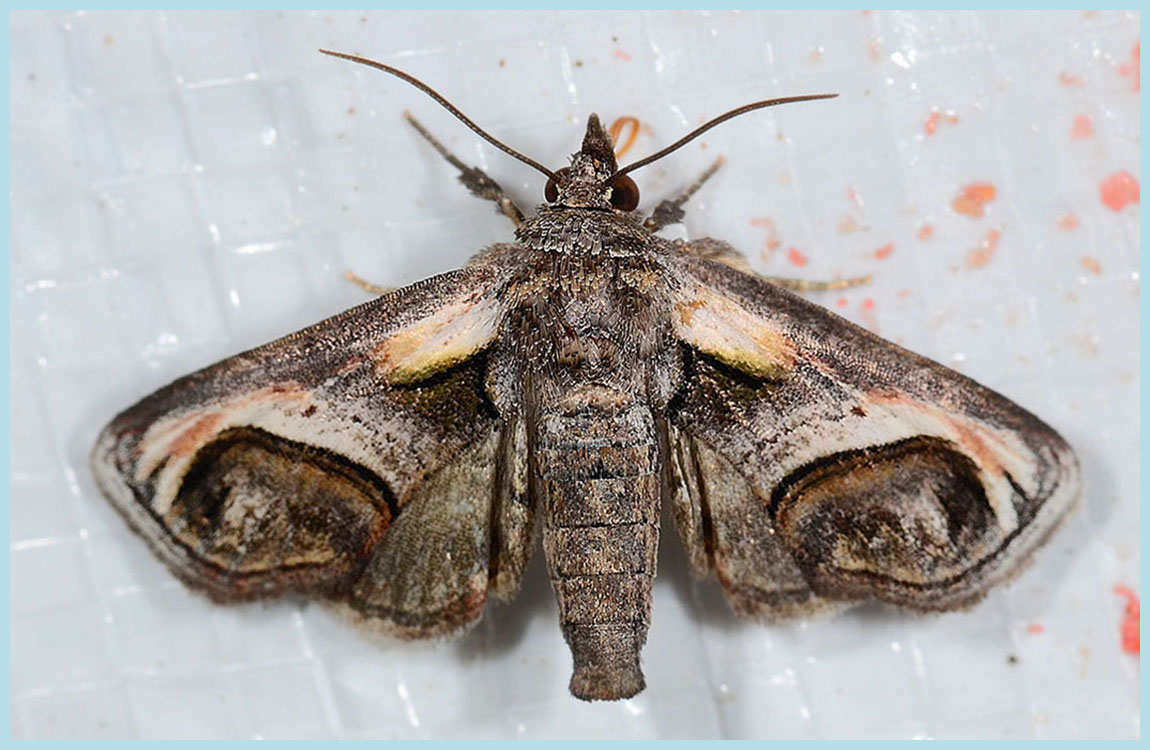
Field Notes: This intense looking animal is fascinating in many aspects of its life history. For starters you gotta admirer any critter whose young (larvae) can feed on something as pernicious as poison ivy - as a matter of fact that's its sole larval food plant! Another curious feature of occulatrix is the dramatic eye patterns on the forewing. It is not known for sure, but these bold markings are thought to mimic vertebrate eyes that may make the moth look intimating to would be predators. Another hypothesis is that they warn potential predators that they are unpalatable as they've incorporated the toxins into the adult moth from the host plant as caterpillars. Every school kid knows this about the monarch butterfly larvae that feeds on the poisonous exudates of milkweeds (Asclepius sp.), but a moth that does this, now that's cool! When sitting on bark they blend in cryptically, when on a twig or stem they raise their abdomen in the air which can fool predators into thinking they are extensions of the plant.
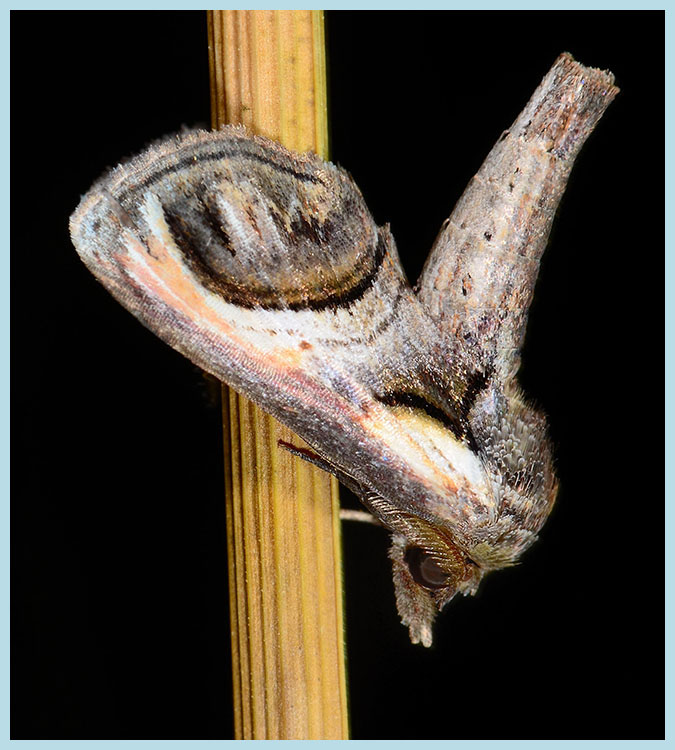
Lateral View
Species: Paleacrita vernata
Species: Palpita magniferalis
Species: Palrallelia bistriaris
Species: Palthis angulalis
Species: Palthis asopialis
Species: Pandemis limitata
Species: Pangrapta decoralis
