Species: Alsophila pometaria
Hodges: 6258
Flight Period: Late October - December
Length: 26-32mm
Peterson: 209
Hosts: Deciduous trees and rose species
Field Notes: This has to be one of the most interesting-drab-looking moths in Troy Meadows - an oxymoron I know. Let me explain. First of all, as the name implies, it's a distinct biomarker of the fall season. To find this moth fluttering about a woodland is to know its mid-October or November. White-tail deer hunters call them "Hunter's Moths." The females are wingless (image bottom right) and attract males by crawling up a tree trunk and wafting pheromones (sexual chemical signals) that guide them to their paramour. The female then deposits a unique series of geometrically shaped eggs around a twig - looks like a barrel when complete. In outbreak years this moth is considered to be a pest. As an early season defoliator, this moth periodically can do significant damage to forests. The good news is forests have evolved a natural counter balance to help correct the issue. Braconid wasps (image upper left) will lay eggs in cankerworm larvae, eating the caterpillar from the inside out. This inherent biologic control agent is one of hundreds of thousands of natural connections imbedded into the fabric of the Meadows. Many of these connections are little understood but their protection is of paramount importance for proper ecologically functioning to continue.
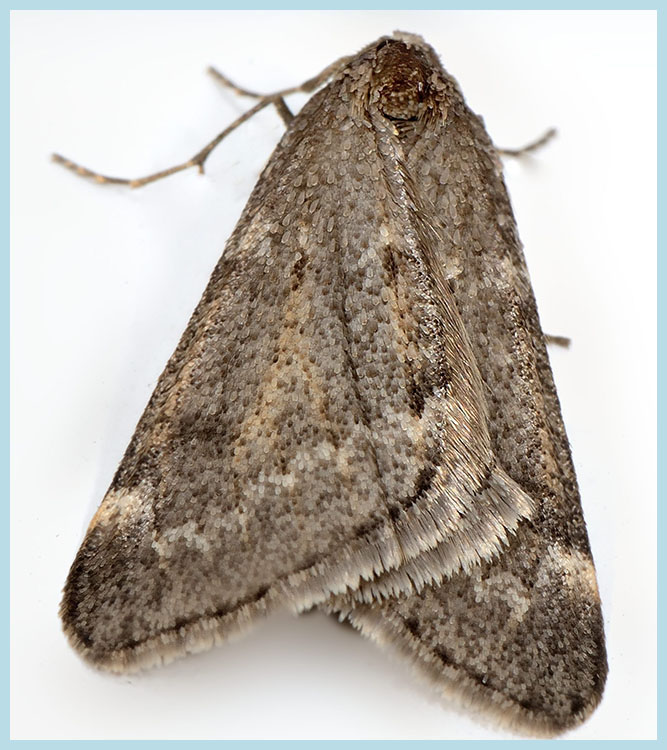
Adult Male
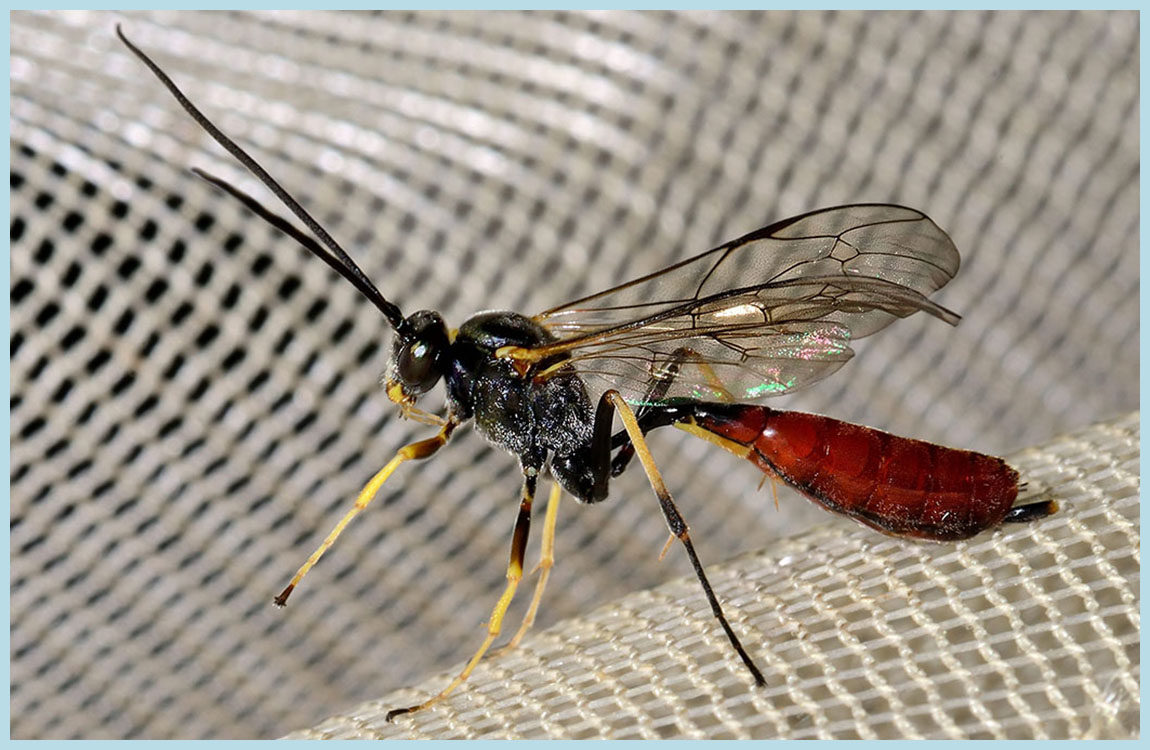
Braconid wasp
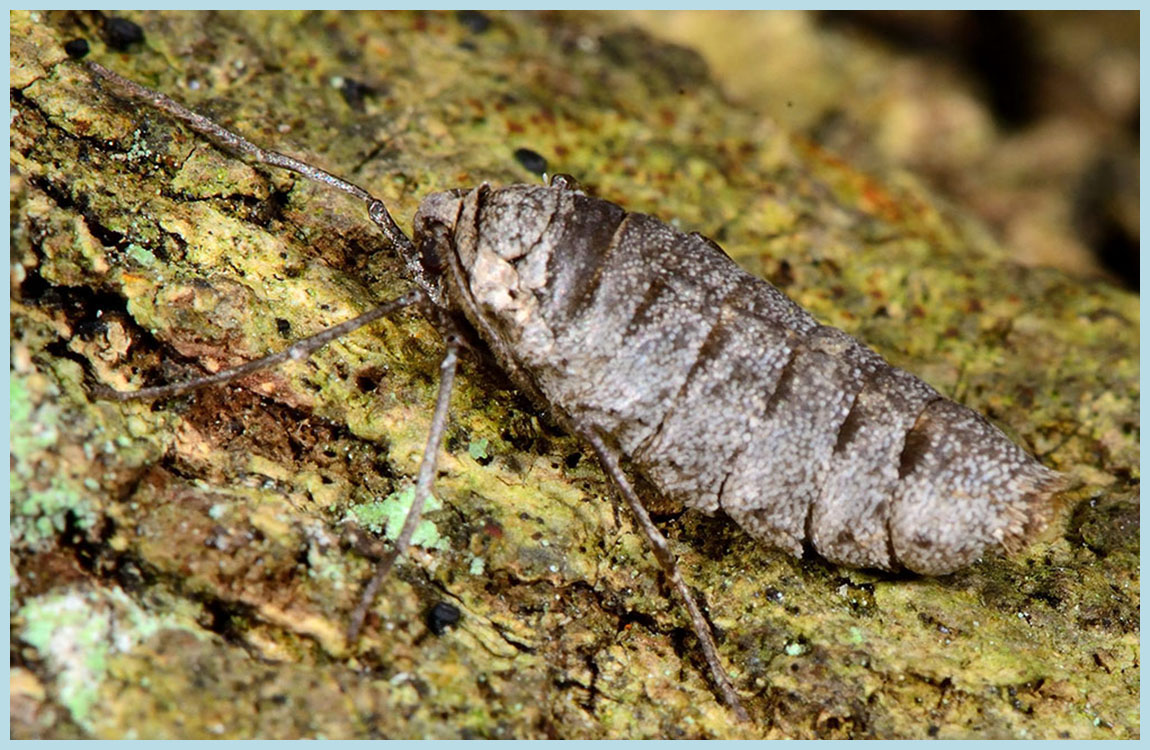
Adult Female
Species: Amphipoea americana
Species: Amphipyra pyramidoides
Species: Anageshna primordialis
Species: Anagrapha falcifera
Species: Anania coronata
Species: Anavitrinella pampinaria
Species: Ancylis divisana
Tribe: Noctuini
Species: Anicla infecta
Hodges: 10911
Flight Period: Mid -June - November
Length: 17-20mm
Peterson: 507
Hosts: Low plants, beets, clover, grasses
Field Notes: Why they give this moth the common name of "Green" cutworm we can't say. The moths color ranges from deep gray to almost pink. The black fragmented reniform spots are diagnostic on the forewings (red arrow in image). Troy Meadows is not in close proximity with any large agricultural operation so the presence of warm and cold season grasses in the wetland fringes and upland meadows is likely responsible for the moths presence. Reviewing the scientific literature for the species it seems to be a common theme that the moth is routinely found in areas of open marsh, wetlands, and upland waste lots - sounds a lot like Troy Meadows. This moth appeared at our survey lights in June, July, and August so we would consider it to be amongst the Meadows most common moths.

Species: Anomis privata
